

大尺寸電控玻璃電極脫開Electrode detachment on large smart glass
母線在大尺寸下與 ITO 導電層脫開,玻璃無法切換。這一案已有完整 17 頁技術簡報,涵蓋 CTE 失配、尺寸放大效應,以及分段母線與銀層銅網解法、導入路線圖。On large panels, the busbar separates from the ITO conductive layer and the glass can no longer switch. This case has a full 17-page tech brief covering CTE mismatch, scale-up effects, the segmented-busbar and silver-layer copper-mesh solutions, and the rollout roadmap.
看完整技術簡報 →View full tech brief →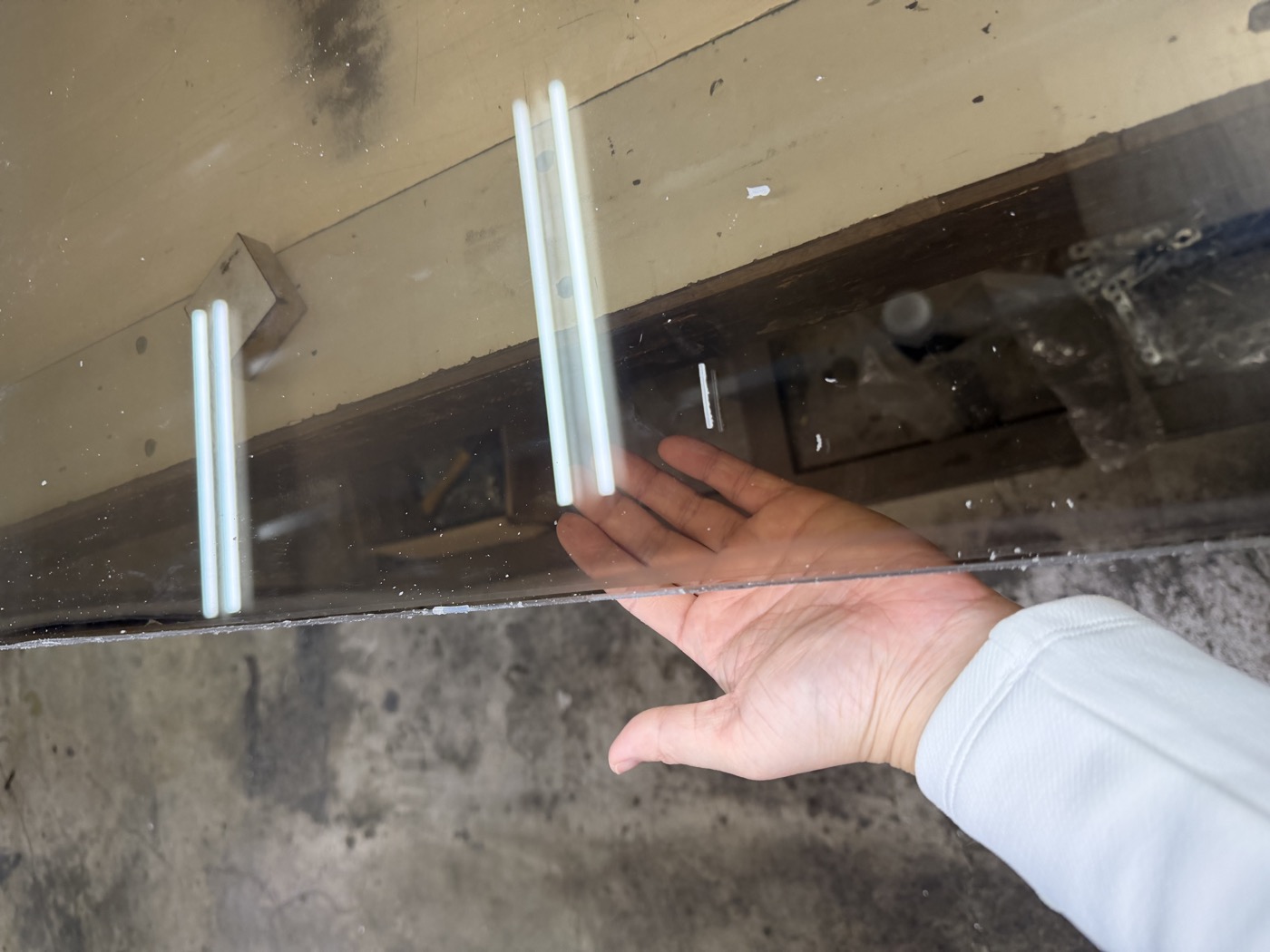
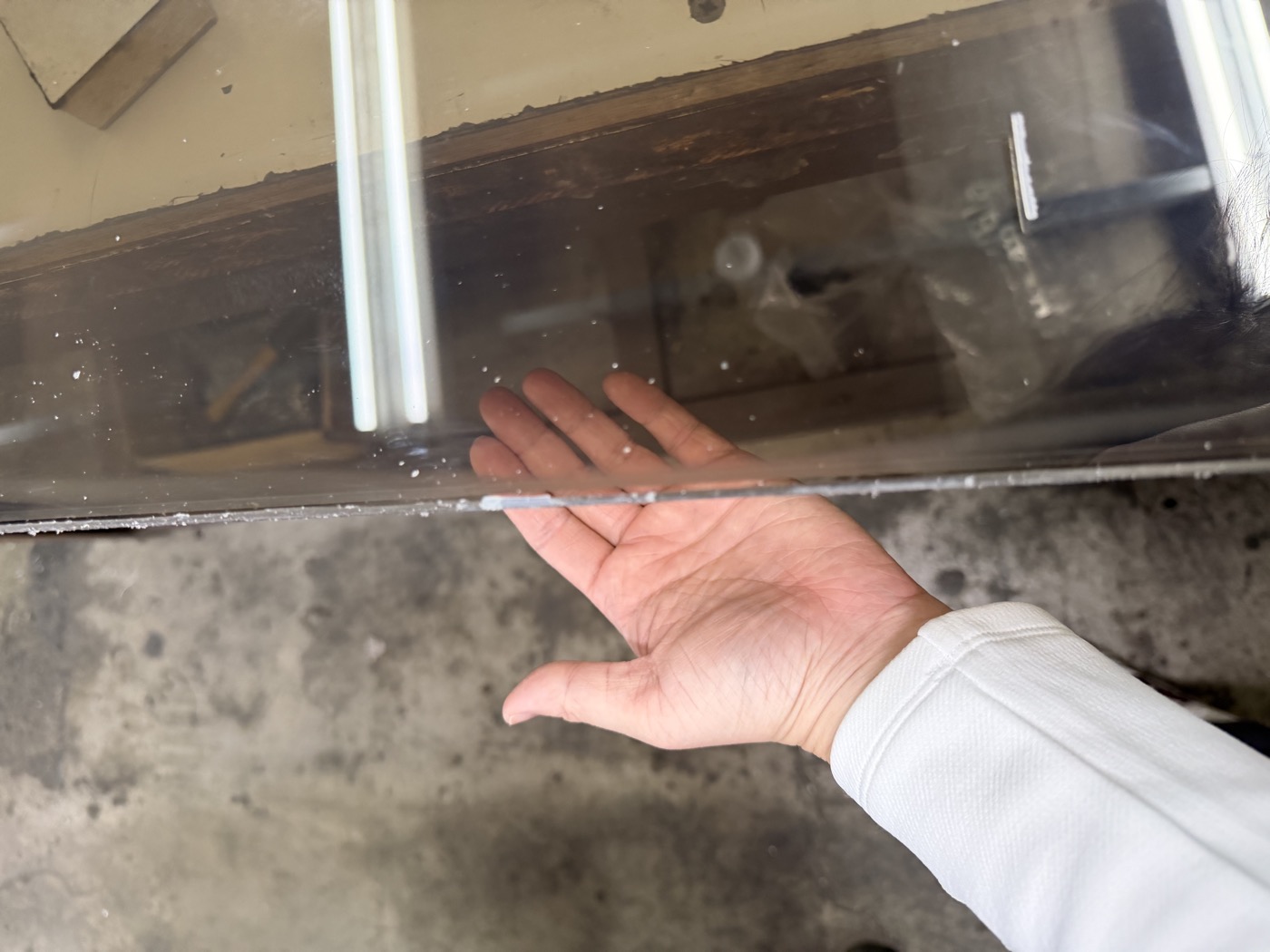
尺寸放大不是線性問題——大板電極要用大板的設計。Scaling up isn't a linear problem—large panels need an electrode design built for large panels.
膠合玻璃脫膠/剝離:五金開孔與邊緣的應力帶Laminated glass delamination / peeling: the stress zones at hardware cutouts and edges
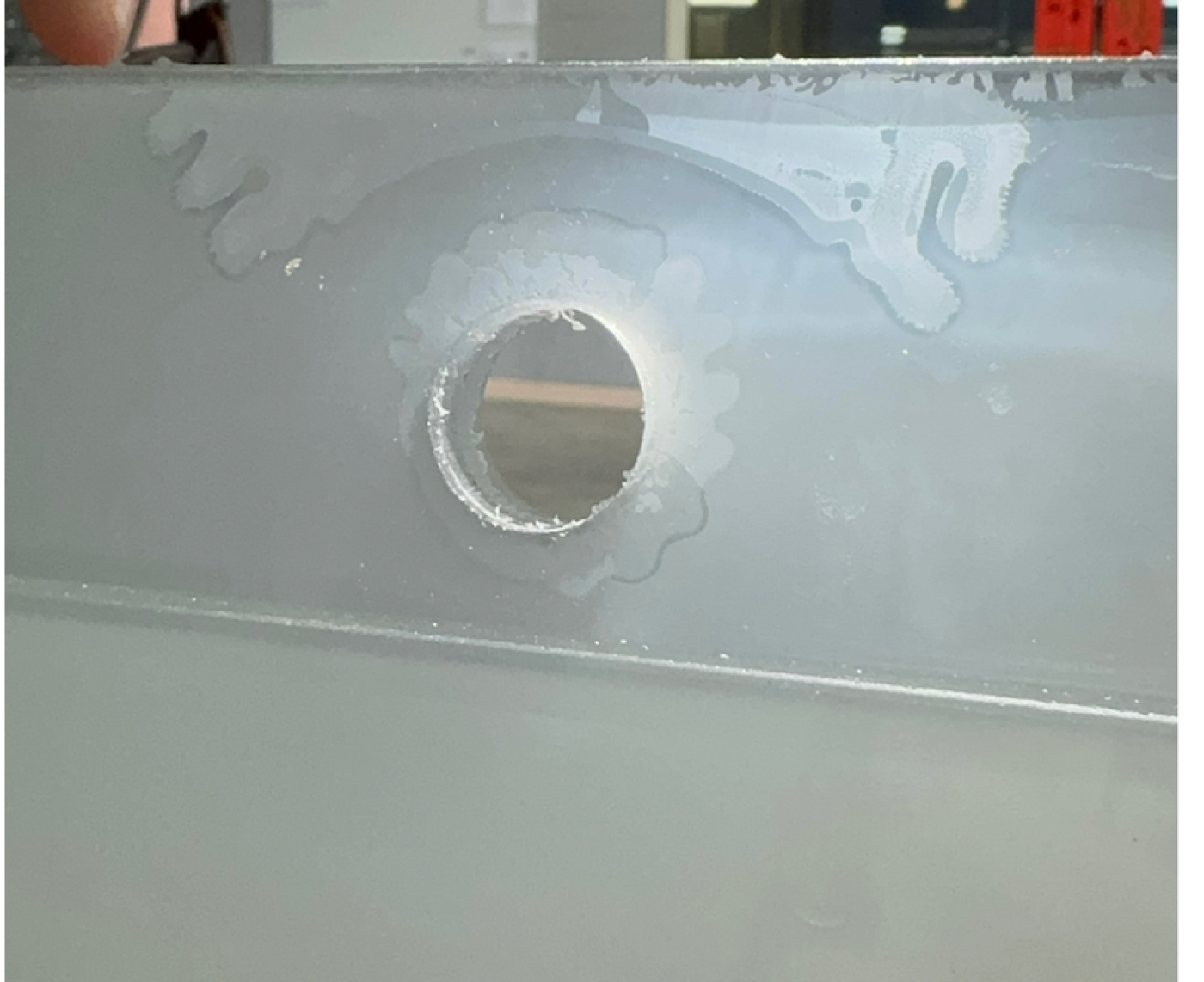
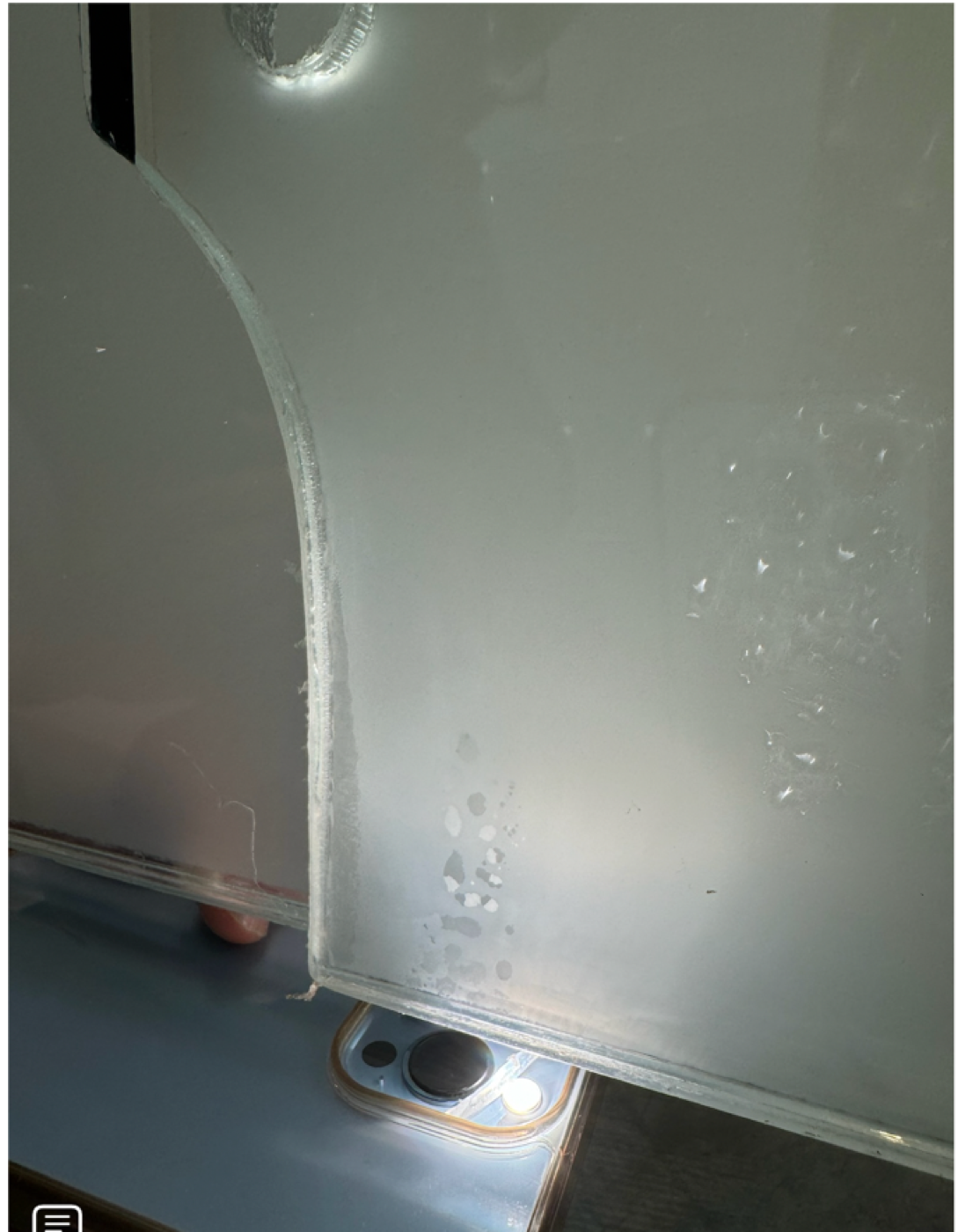
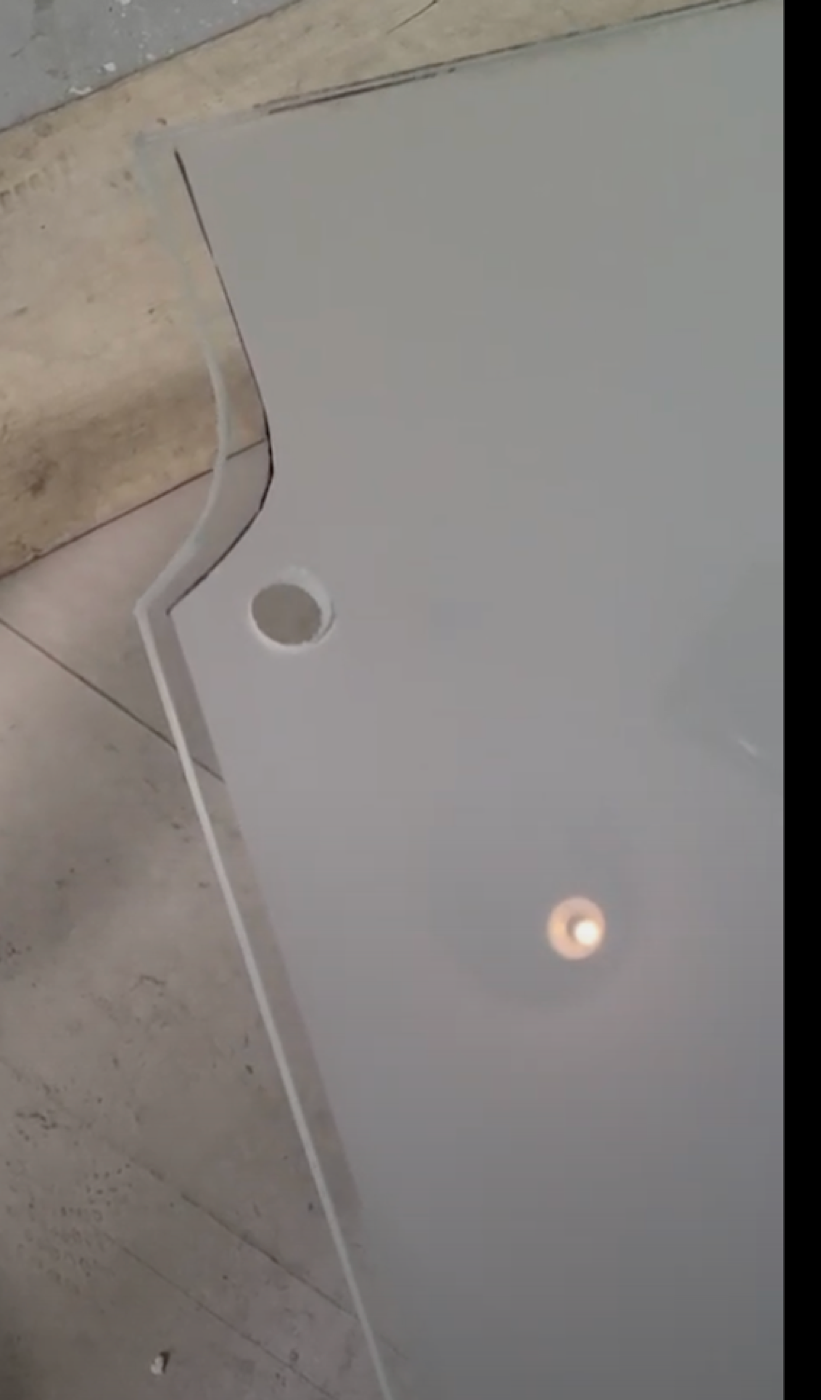
膠合電控玻璃在固定片把手邊緣、門片鉸鍊邊緣出現脫膠(白化分離);五金開孔周圍亦見氣泡狀脫膠。Laminated smart glass delaminates (whitened separation) at the handle edge of fixed panels and the hinge edge of doors; bubble-like delamination also appears around hardware cutouts.
膠合電控玻璃在固定片把手邊緣、門片鉸鍊邊緣出現脫膠(白化分離);五金開孔周圍亦見氣泡狀脫膠。Laminated smart glass delaminates (whitened separation) at the handle edge of fixed panels and the hinge edge of doors; bubble-like delamination also appears around hardware cutouts.
- 環境水氣滲入。Ambient moisture seeps in.
- 矽利康(silicone)選用不當與夾層不相容。The wrong silicone is chosen and is incompatible with the interlayer.
- 強化玻璃製程翹曲(roller wave)使夾層受不均應力。Roller wave from the tempering process puts uneven stress on the interlayer.
- 五金安裝後的表面張力與扭力集中在邊緣與開孔處。After hardware is installed, surface tension and torque concentrate at the edges and cutouts.
- 膠合製程採兩片 0.8mm EVA 中間膜(較傳統 0.36mm 單片更厚,貼合更緊密)。Laminate with two 0.8mm EVA interlayers (thicker than the conventional single 0.36mm sheet, for a tighter bond).
- 調整 5mm 邊緣見光面,讓兩片玻璃直接緊密相連。Set a 5mm clear edge margin so the two glass plies bond directly and tightly.
- 採特殊封邊膠密封調光膜切割面,抵抗玻璃翹曲拉扯。Seal the cut edge of the PDLC film with a special edge sealant to resist the pull of glass warpage.
脫膠好發位置就是「應力集中處」——把手、鉸鍊、開孔。驗收時這三處要重點看。Delamination shows up wherever stress concentrates—handles, hinges, cutouts. Inspect these three spots closely during acceptance.
強化玻璃直角轉角開孔破裂:三次安裝的根因收斂Square-corner cutout cracking in tempered glass: narrowing the root cause over three installs
玻璃門片在直角轉角開孔處反覆破裂,三次安裝三次裂。A glass door kept cracking at its square-corner cutout—three installs, three breaks.
玻璃門片在直角轉角開孔處反覆破裂,三次安裝三次裂。A glass door kept cracking at its square-corner cutout—three installs, three breaks.
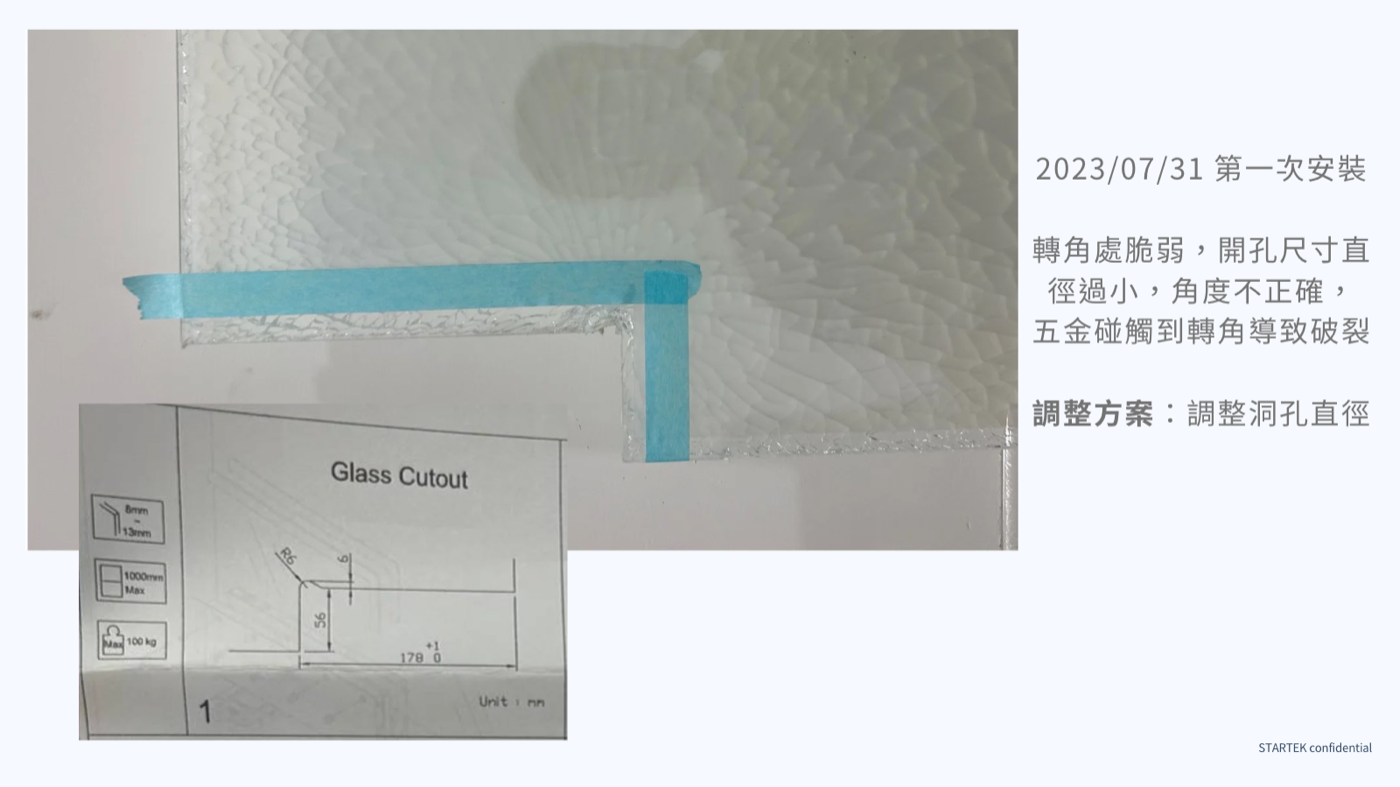
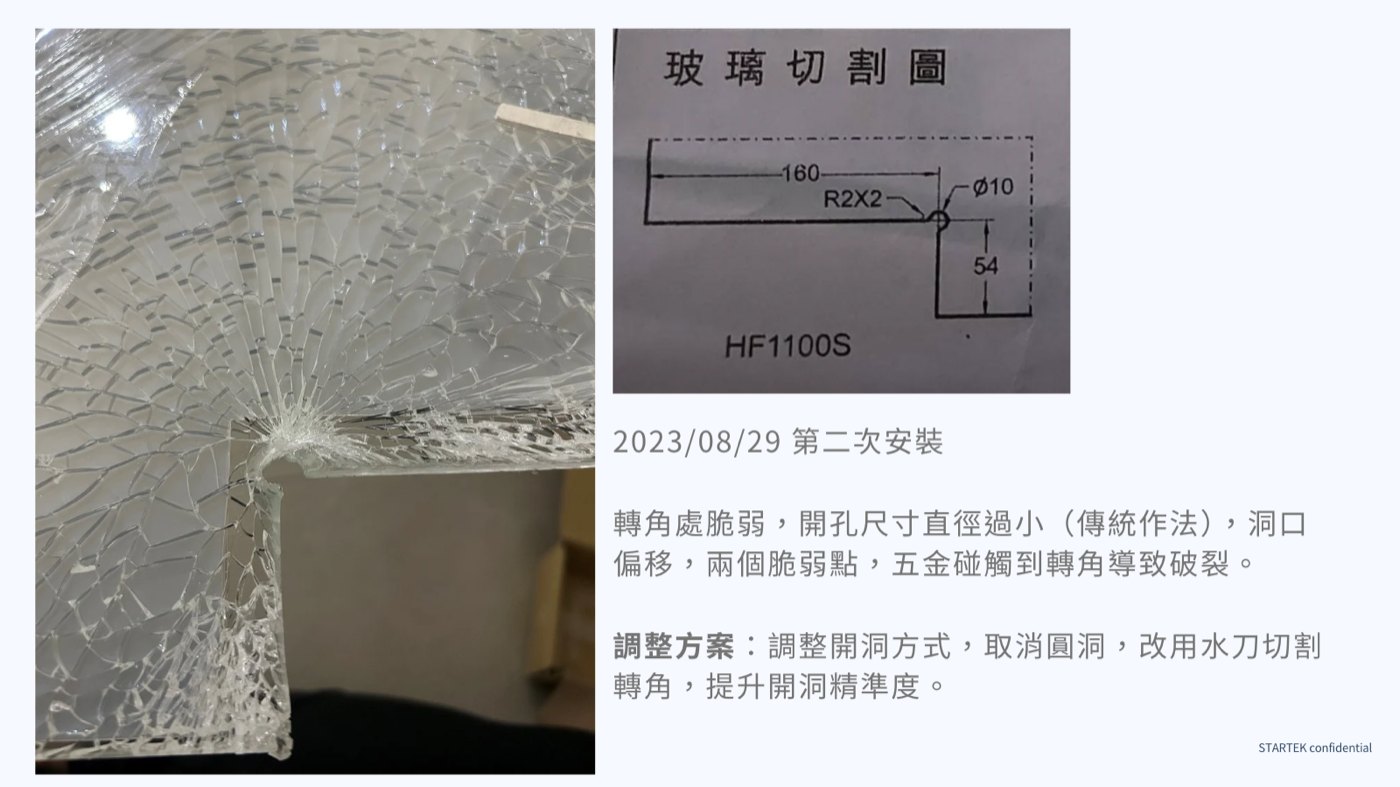
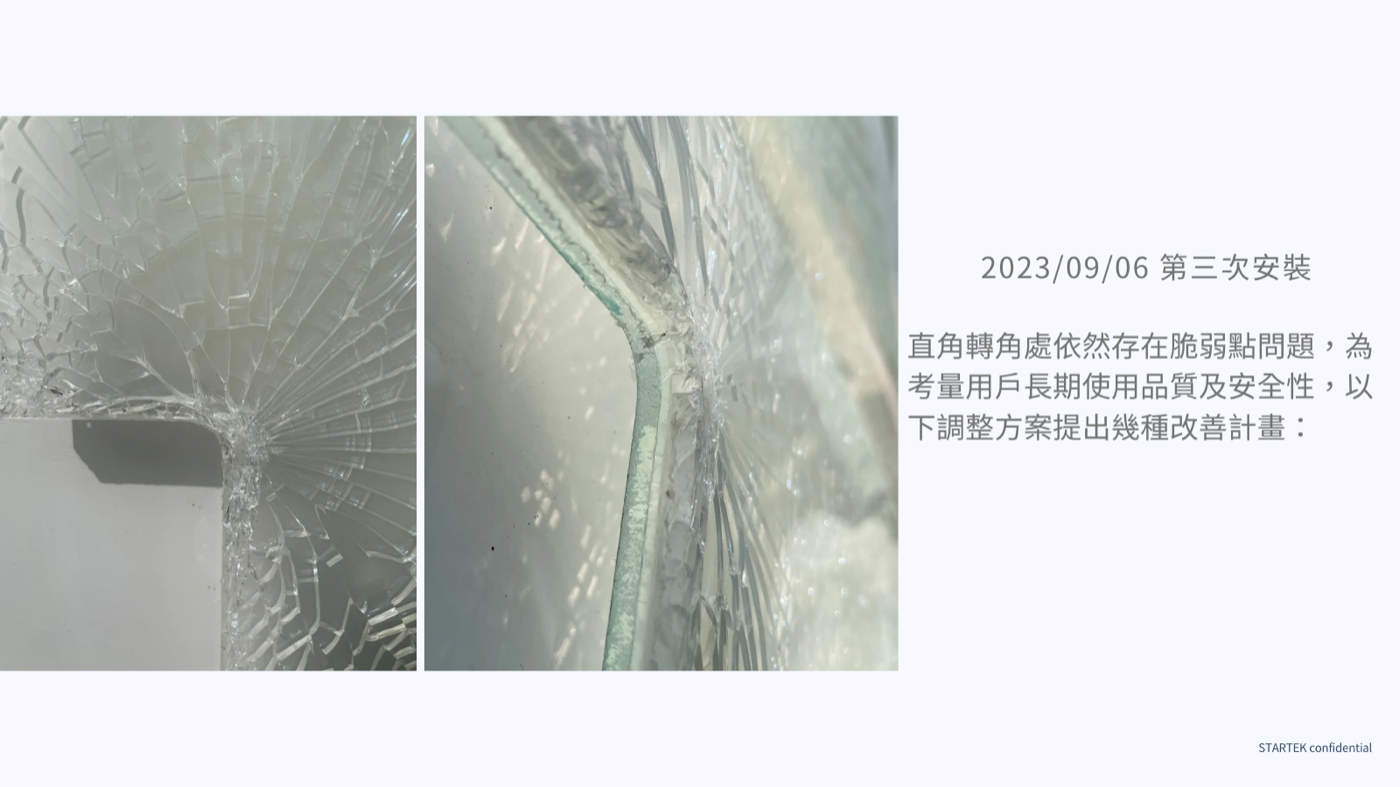
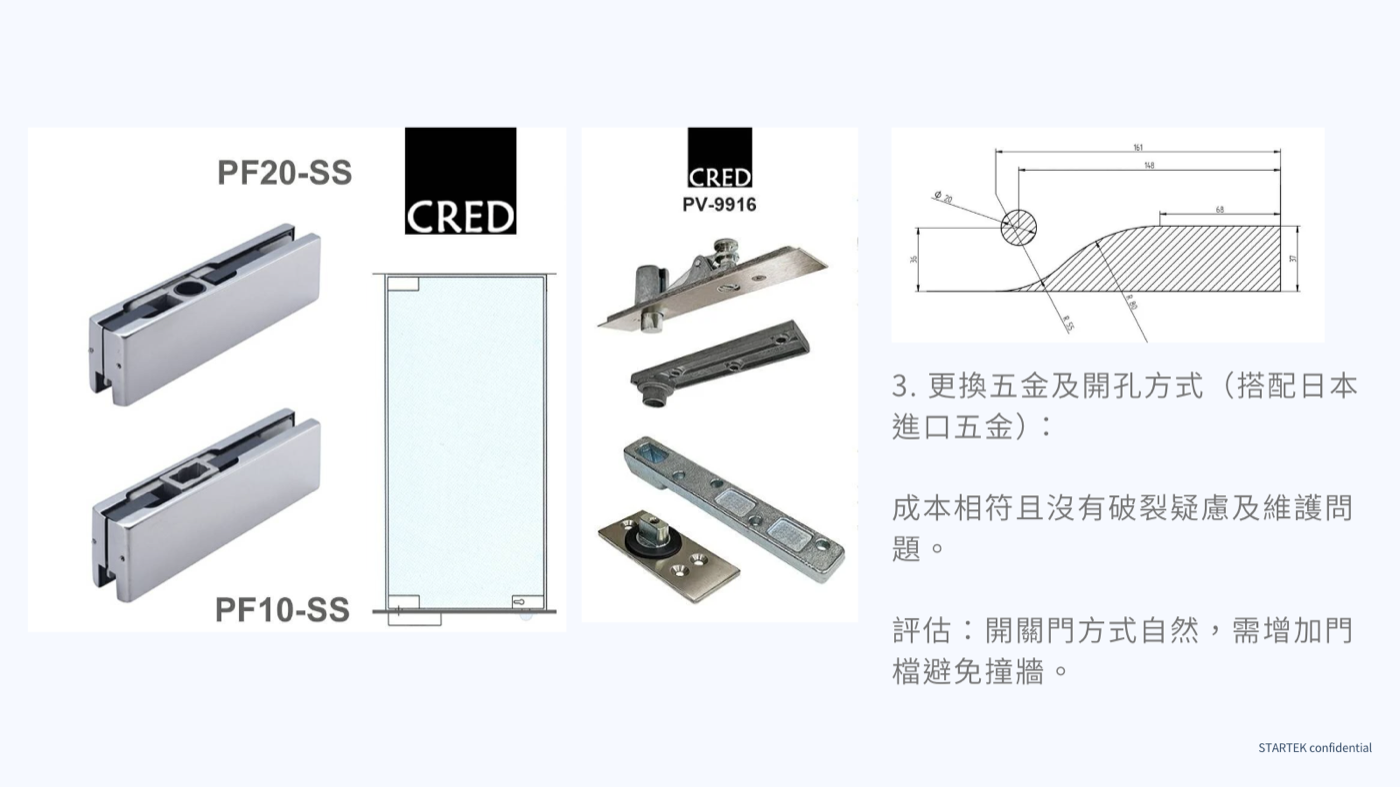
- 第一次:開孔直徑過小、角度不正,五金碰觸轉角應力集中。First: the cutout was too small and off-angle, so the hardware touched the corner and concentrated stress.
- 第二次:傳統圓孔開法洞口偏移、形成雙脆弱點。Second: the conventional round-hole method left an offset hole that created two weak points.
- 第三次:確認「直角轉角本身就是結構脆弱點」,單靠開孔精度救不了。Third: confirmed the square corner itself is a structural weak point—cutout precision alone can't fix it.
- 評估三方案——維持五金、提升打洞精度(仰賴良率)。Weighed three options—keep the hardware and improve drilling precision (yield-dependent).
- 換日本進口五金+軟墊片緩衝(成本近兩倍)。Switch to imported Japanese hardware with a cushioning pad (nearly double the cost).
- 換五金+改開孔方式(CRED 五金,成本相符且無破裂疑慮)→ 採此方案,另加門檔避免開門撞牆。Switch the hardware and the cutout method (CRED hardware—cost-comparable and crack-free) → chosen, plus a door stop to keep the door from hitting the wall.
反覆異常時不要停在「同一個對策做更好」——要回頭懷疑結構性根因。轉角開孔的玻璃門片,五金與開孔方式要一起選。When a failure keeps recurring, don't just refine the same fix—step back and question the structural root cause. For glass doors with corner cutouts, choose the hardware and the cutout method together.
膠合玻璃白霧化(EVA 水氣侵蝕)Laminated glass fogging (EVA moisture attack)
膠合電控玻璃表面或內部出現白霧狀、由周圍向中心擴散,通斷電功能正常但透明度受損。A white haze appears on or inside the laminated smart glass, spreading from the edges toward the center; switching still works, but clarity is degraded.
膠合電控玻璃表面或內部出現白霧狀、由周圍向中心擴散,通斷電功能正常但透明度受損。A white haze appears on or inside the laminated smart glass, spreading from the edges toward the center; switching still works, but clarity is degraded.
EVA 對水氣阻隔性有限,玻璃密封不良或長期高濕環境下水氣滲入膠層;製程真空度不足、排氣不完全留下微空隙也會吸水氣霧化。EVA is a limited moisture barrier, so with poor edge sealing or long-term high humidity, moisture seeps into the adhesive layer; insufficient process vacuum and incomplete degassing also leave micro-voids that absorb moisture and fog up.
- 膠合片料邊緣以 PET 膠帶保護、四周密封完整。Protect the laminate edges with PET tape and seal all four sides completely.
- 調光膜內縮 3mm 避免直接暴露於邊緣。Inset the PDLC film 3mm so it isn't exposed right at the edge.
- 以 85°C/85% 濕熱信賴性測試驗證對策有效性。Validate the fix with an 85°C/85% damp-heat reliability test.
白霧化是「慢性病」,可能數月後才顯現——預防靠封邊品質,驗收時注意玻璃邊緣密封完整性。Fogging is a slow-onset problem that may only show up months later—prevention comes down to edge-sealing quality, so check the integrity of the glass edge seal during acceptance.
茶半反射玻璃滾輪刮痕:製程順序的取捨Roller marks on bronze half-mirror glass: the process-order trade-off
5+5mm 茶色半反射膠合電控玻璃表面出現滾輪痕跡。Roller marks appeared on the surface of 5+5mm bronze half-mirror laminated smart glass.
5+5mm 茶色半反射膠合電控玻璃表面出現滾輪痕跡。Roller marks appeared on the surface of 5+5mm bronze half-mirror laminated smart glass.
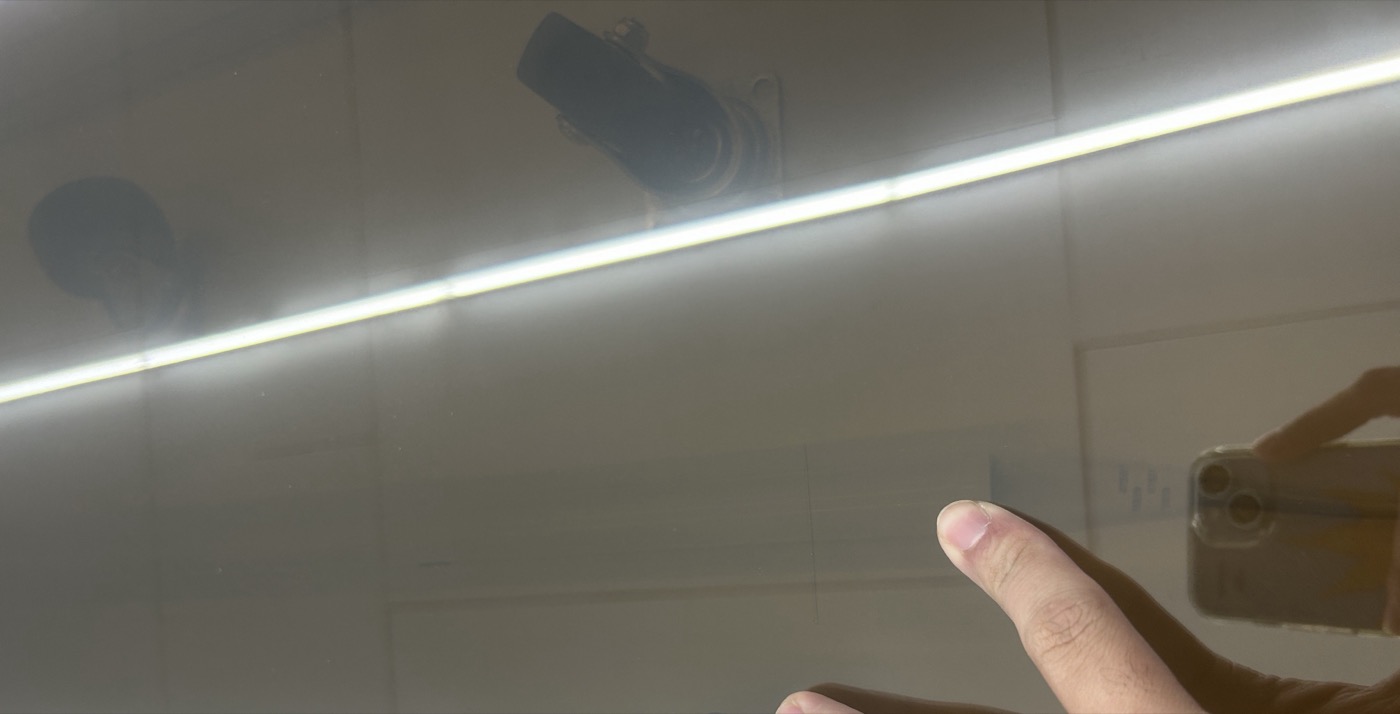
半反射玻璃有鍍膜,正常流程是合片膠合後光邊;但此類訂單若有 45 度合口+光邊需求,必須先光邊合口再合片,鍍膜面就會留下滾輪痕。Half-mirror glass is coated, and the normal flow is to laminate first, then edge-polish; but when an order calls for a 45-degree miter joint plus edge polishing, the edging and jointing must come before lamination, which leaves roller marks on the coated surface.
- 將此製程限制納入售前告知——客戶選半反射+特殊邊角加工時,事先說明會有此狀況。Fold this process limitation into the pre-sale briefing—when a customer chooses half-mirror glass plus special edge work, flag the condition up front.
特殊玻璃+特殊加工的組合,先查製程順序有沒有衝突,把「物理上避不掉的」變成「事先講好的」。For any special-glass-plus-special-process combo, check the process order for conflicts first, and turn what's physically unavoidable into something agreed on in advance.
膠合玻璃色差:批次與料別Color variation in laminated glass: batches and glass grades
膠合電控玻璃成品顏色不均。The finished laminated smart glass shows uneven color.
膠合電控玻璃成品顏色不均。The finished laminated smart glass shows uneven color.
優白玻璃/超白玻璃料別不同,或同料別不同批次、不同製造工廠,本就存在輕微色差。Low-iron versus ultra-clear glass grades—or the same grade from different batches or different factories—naturally carry slight color differences.
- 售前告知——業主詢問時主動說明色差來源與範圍。Brief up front—when the owner asks, proactively explain the source and range of the color variation.
同一案場的玻璃盡量同批下單;分批追加時要預告色差可能。Order glass for one project in a single batch where possible; when adding in later batches, warn of possible color variation.
電極製作不良:銀漿溢出與異常發熱Poor electrode fabrication: silver paste overflow and abnormal heating
直貼調光膜完工數月後出現異常(局部變化),檢測發現電極溫度異常。An adhesive-backed PDLC film developed a fault (localized change) months after install; testing found an abnormal electrode temperature.
直貼調光膜完工數月後出現異常(局部變化),檢測發現電極溫度異常。An adhesive-backed PDLC film developed a fault (localized change) months after install; testing found an abnormal electrode temperature.
電極製作時銀漿溢出至膜片半斷邊緣,形成異常路徑導致發熱。During electrode fabrication, silver paste overflowed onto the film's half-cut edge, creating an abnormal current path that caused heating.
- 確立電極製作規範——銀漿寬度 <2mm、不可溢出至半斷邊緣。Set an electrode-fabrication spec—silver paste width <2mm, with no overflow onto the half-cut edge.
- 異常案場以紅外線測溫排查電極溫度。On problem sites, check electrode temperature with an infrared thermometer.
電極發熱是隱性風險——驗收時通電 10 分鐘以上測電極溫度,比目視更可靠。Electrode heating is a hidden risk—during acceptance, power the glass for 10-plus minutes and measure the electrode temperature; it's more reliable than a visual check.
斷路與短路的現場判定Diagnosing open vs. short circuits on site
會議室調光膜局部失效,需判定是斷路還是短路。A conference-room PDLC film partially failed, and the question was whether it's an open or a short circuit.
會議室調光膜局部失效,需判定是斷路還是短路。A conference-room PDLC film partially failed, and the question was whether it's an open or a short circuit.
電極結構(銅網/銀漿/焊接點)受損 → 斷路;異物或電極缺陷 → 短路。兩者對策完全不同。Damage to the electrode structure (copper mesh / silver paste / solder joints) → open circuit; a foreign object or electrode defect → short circuit. The fixes are completely different.
- 建立斷路/短路檢查方向對照(按壓電極有機率暫時通電=斷路徵兆),依判定結果決定修復或換膜。Use an open-vs.-short diagnostic guide (pressing the electrode may briefly restore conduction = a sign of an open circuit), then decide between repair and film replacement based on the result.
「不會動」有兩種病因——斷路、短路的判定先行,避免換了膜問題還在。"It won't switch" has two possible causes—diagnose open vs. short first, so you don't replace the film only to find the problem still there.
調光膜黃化(ITO 氧化)PDLC film yellowing (ITO oxidation)
調光膜逐漸變黃,但通斷電功能仍正常。The PDLC film gradually turns yellow, though switching still works.
調光膜逐漸變黃,但通斷電功能仍正常。The PDLC film gradually turns yellow, though switching still works.
電極腐蝕、銀漿異常、或非對稱波形導致 ITO 導電層氧化還原;未驗證的矽利康/助焊劑會腐蝕電極產生銅綠,高電壓方波會加速異常。Electrode corrosion, faulty silver paste, or an asymmetric waveform drives oxidation-reduction of the ITO conductive layer; unvalidated silicone or flux can corrode the electrode and form verdigris, and a high-voltage square wave accelerates the failure.
- 電極依 SOP 製作並完整封邊防水氣。Fabricate electrodes per SOP and seal the edges fully against moisture.
- 矽利康只用驗證過的中性款。Use only validated neutral-cure silicone.
- 使用指定變壓器(弦波,正確電壓頻率)。Use the specified transformer (sine wave, correct voltage and frequency).
- 異常排查:檢查銀漿溢出、銅箔腐蝕,通電 10 分鐘測電極發熱。Troubleshooting: check for silver paste overflow and copper-foil corrosion, and power for 10 minutes to measure electrode heating.
黃化是電化學問題不是「老化必然」——用對矽利康、用對變壓器就能避免大半。Yellowing is an electrochemical problem, not inevitable aging—the right silicone and the right transformer prevent most of it.
黑水(電極水氣侵蝕)Edge blackening (moisture corrosion of the electrode)
玻璃邊緣出現黑色侵蝕痕跡(俗稱黑水),後續通電無反應。Black corrosion marks appear along the glass edge (known as edge blackening), and the glass then no longer responds to power.
玻璃邊緣出現黑色侵蝕痕跡(俗稱黑水),後續通電無反應。Black corrosion marks appear along the glass edge (known as edge blackening), and the glass then no longer responds to power.
水氣/水珠從外圍侵入裸露電極,通電時擊穿焦黑。Moisture or water droplets reach the exposed electrode from the perimeter and burn through to a charred black when powered.
- 矽利康封邊完整,阻擋水氣侵蝕膜片邊緣。Seal the edges fully with silicone to keep moisture from attacking the film edge.
- 電極以 silicone 或絕緣膠帶整段封邊保護。Protect the electrode along its full length with silicone or insulating tape.
- 框架設計時檢查滲水風險(浴室/對外窗尤其注意)。Check for water-intrusion risk when designing the frame (especially for bathrooms and exterior windows).
電極是整片玻璃最怕水的地方——潮濕場域的封邊不是選配。The electrode is the most water-sensitive part of the whole panel—in damp settings, edge sealing isn't optional.